What it is
In a Cleveland, Tennessee pain clinic the day fails at the board, not in the exam room. A double-booked injection, a patient whose eligibility was never run, a no-show that sits in “arrived” because nobody marked it — those are scheduling problems that become documentation and billing problems an hour later.
On the clinic floor
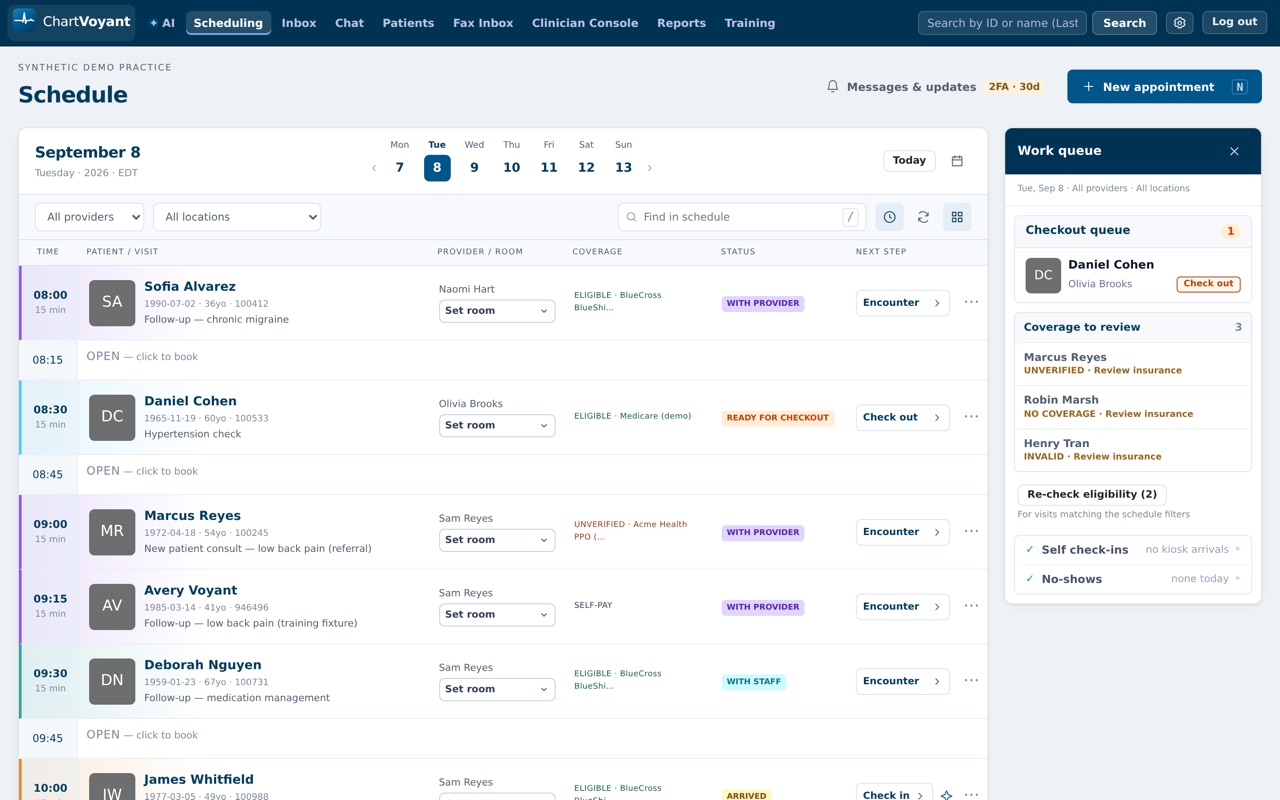
The day board shows visits with coverage chips and a next-step button — check in, start exam, sign off — so the desk and the clinician are looking at the same state. Combined provider and location filters keep a two-provider office readable. Show weekends is this office’s booking rule, default off, and the phone assistant reads the same flag. Still-booked visits wait 30 minutes after start in practice time before they appear on the no-show list; Mark no-show lives on the visit menu and requires a reason.
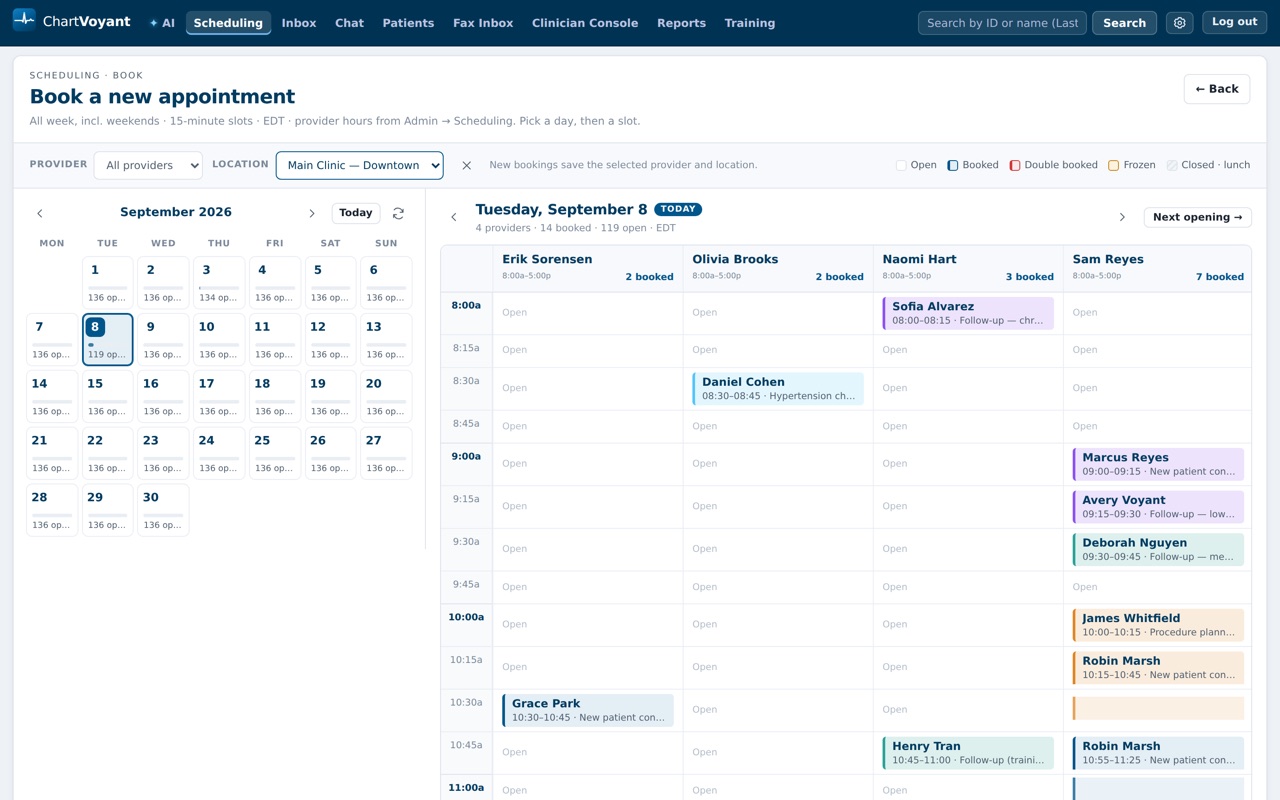
Booking is a compact clinic calendar on the left — capacity bars, a red dot for a real double-booking, today’s number in accent — and a time-rail on the right, one column per provider. Next opening jumps to the first day that actually has a slot. Appointment reminders can include the patient balance. Procedure names print in full, not as an internal code.
What AI does, and what a person confirms
The spark beside Check in opens a visit summary of the appointment, the chart, and insurance. It is a draft read from the record. Conversational check-in — talk or type, an editable rail, then Confirm — is under More actions on the row. The waiting-room kiosk stays a form. The phone assistant can confirm, cancel, or move a visit after identity; it never books a new appointment. Those are administrative actions with a person still on the hook for the confirm step — not clinical decisions, and not silent writes to the chart.
Non-Device CDS
Nothing on the board diagnoses or treats. When AI drafts a check-in extract or a schedule change, a staff member confirms it. Clinical sign-off stays on the clinician.
Where this sits vs bolted-on tools
A standalone scheduler that does not know eligibility, copay, or whether yesterday’s prior auth landed will always be a second source of truth. ChartVoyant’s board is the same record as check-in, the visit, and billing. That is the point of an EMR, and the part most “AI scheduling” products never reach.