What it is
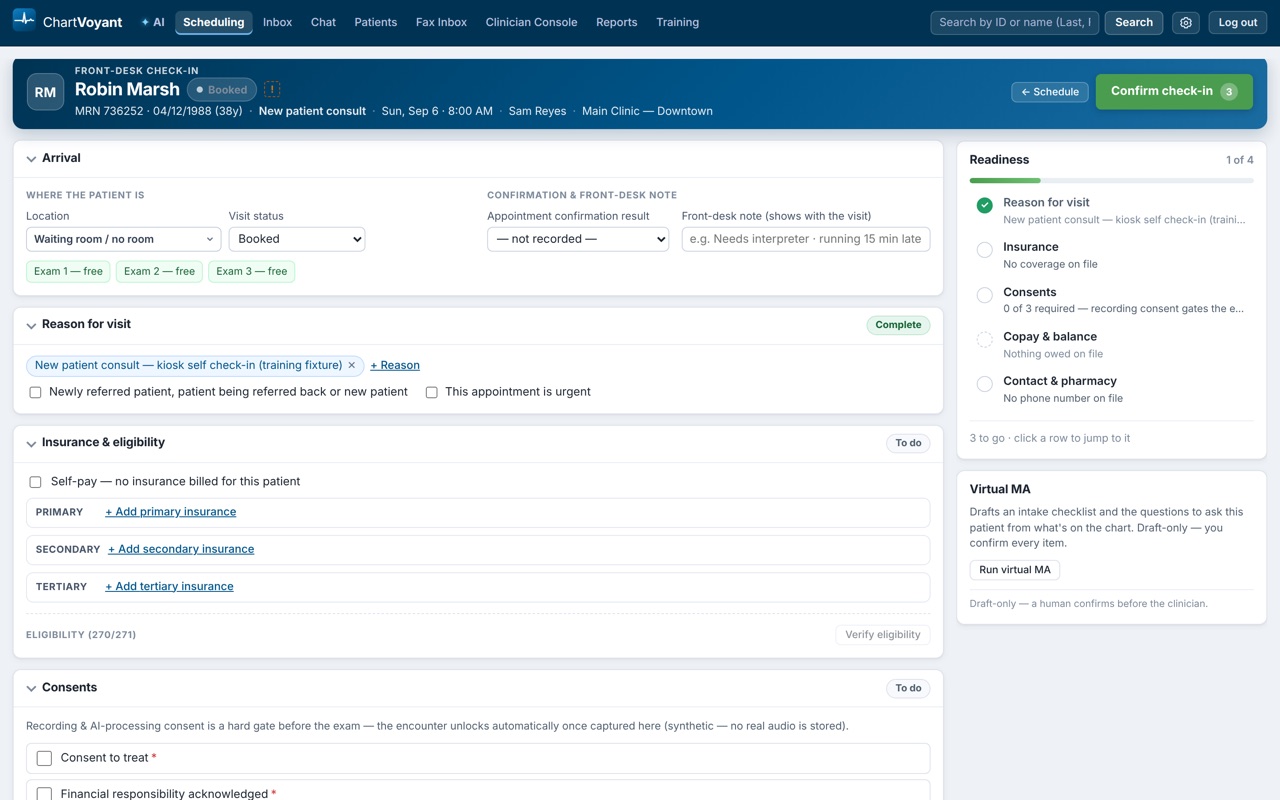
Check-in is the most automatable hour of the day and the hour most EMRs treat as data entry. ChartVoyant’s desk page is a sticky identity band over two columns: work cards in desk order that fold once satisfied, and a Readiness rail computed from the chart the moment the page opens. Each row jumps to its card. Self-pay patients are not asked for insurance or eligibility details.
On the clinic floor
A patient scans a code at the door or checks in at the desk; both paths land in the same place. Insurance is structured fields — payer, member ID, group, subscriber relationship, Medicare Secondary Payer answers — with the card image retained as evidence. The payer is chosen from this practice’s directory so the coverage carries a clearinghouse ID. Eligibility runs against the plan being presented today, not the one on file from March. Intake answers reconcile against the chart as a list of differences to confirm, not a form to retype.
Print billing summary is on the desk: what they owe and why. Copay can be taken on a Square Terminal. An action note sits next to the patient name on check-in and check-out so the next person is not guessing. Kiosk screeners (PHQ-9, GAD-7, ORT on a cadence) and a HIPAA e-signature land on the same chart the clinician will see in the room.
What AI does, and what a person confirms
Quick View has AI: read cards & check eligibility. It reads the photographed insurance card, pulls payer / member ID / group, matches the practice’s payer directory, writes primary coverage, and runs the same eligibility check the button always ran. A payer that is not in the directory is never sent to the wire. The extract is editable. Confirm is a person. Conversational AI check-in, under More actions on a schedule row, follows the same pattern: extract → rail → Confirm. The spark beside Check in is a visit summary of the appointment, the chart, and insurance. The kiosk itself stays a form.
Non-Device CDS
Front-desk AI is administrative. It does not suggest a diagnosis or a plan. Clinical drafts still wait for a clinician. Card-reading that writes coverage still requires a staff confirm before it is the chart of record.
Where this sits vs bolted-on tools
A kiosk vendor that emails a PDF of intake is a retyping job. A clearinghouse portal that is not the chart is a second login. ChartVoyant’s desk is the first hour of the same record the clinician, the biller, and the portal will use. That is why Confirm is allowed with open items: the desk knows the patient is in the parking lot, and blocking the visit because a consent is unsigned is how offices go back to paper sticky notes.