What it is
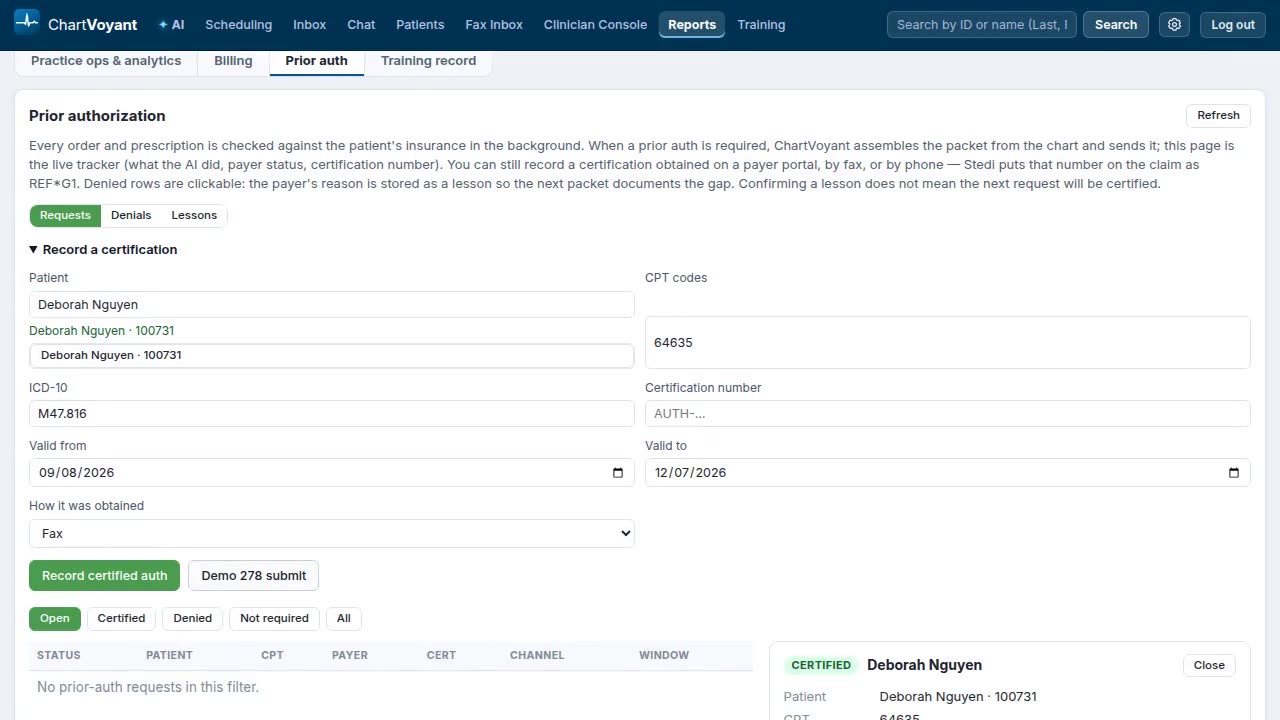
Forty authorizations a week, mostly by phone, is still the shape of independent specialty practice. ChartVoyant’s version is not a fax bot. Every order and prescription is checked against the patient’s coverage. When an authorization is required, the packet is assembled from the chart that already exists — the note, the diagnosis, the failed conservative care — and a person sends it.
On the clinic floor
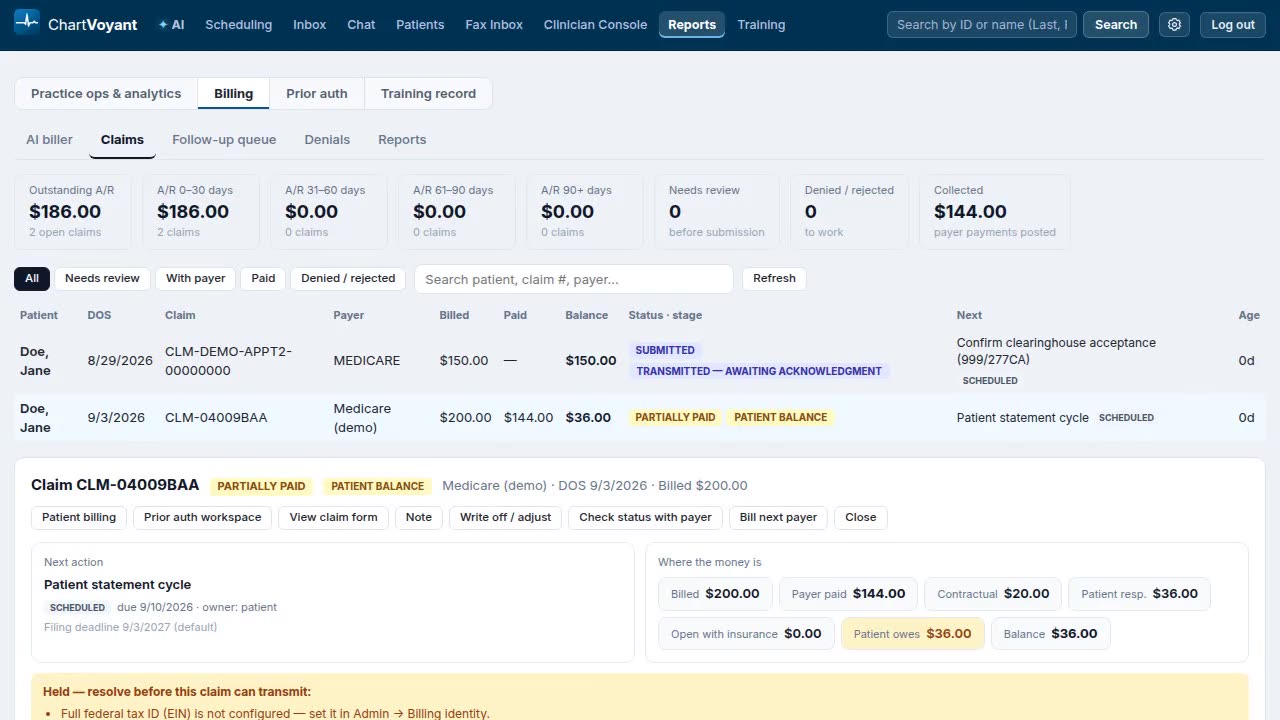
Self-pay charts stay off the PA list. A chart with no verified insurance is on it, marked. Status texts to the patient are on by default in Admin → Reminders. Surgery Scheduling, when the office turns the module on, sends prior auth from the case Auth tab. Manual send exists on Reports → Prior auth for the packet that does not fit the happy path.
The AI biller’s hourly pass can pre-fill PA forms and draft appeals and renewals. It does not transmit an X12 278 to a payer; that submit stays synthetic. A person records a portal, fax, or phone filing. There is an Ask the AI biller line on the page. Admin → Billing → AI biller is the switch. Calls and filings stay human.
What AI does, and what a person confirms
AI drafts the packet from the attested note. It does not invent a diagnosis to satisfy a payer rule. A clinician reviews what will be sent. A denial lesson is stored so the next packet documents the cited gap instead of repeating it. That is the opposite of an autonomous prior-auth vendor that submits on a confidence score.
Non-Device CDS
Coverage rules and packet drafts are administrative. They are not a treatment recommendation. If a suggestion looks clinical — “document X to justify Y” — it is still a draft for the clinician who already decided to treat.
Where this sits vs bolted-on tools
Most PA products start from a reconstructed claim and a blank PDF. ChartVoyant starts from the visit that just happened.